

Pearl Research
What is Pearl Research?
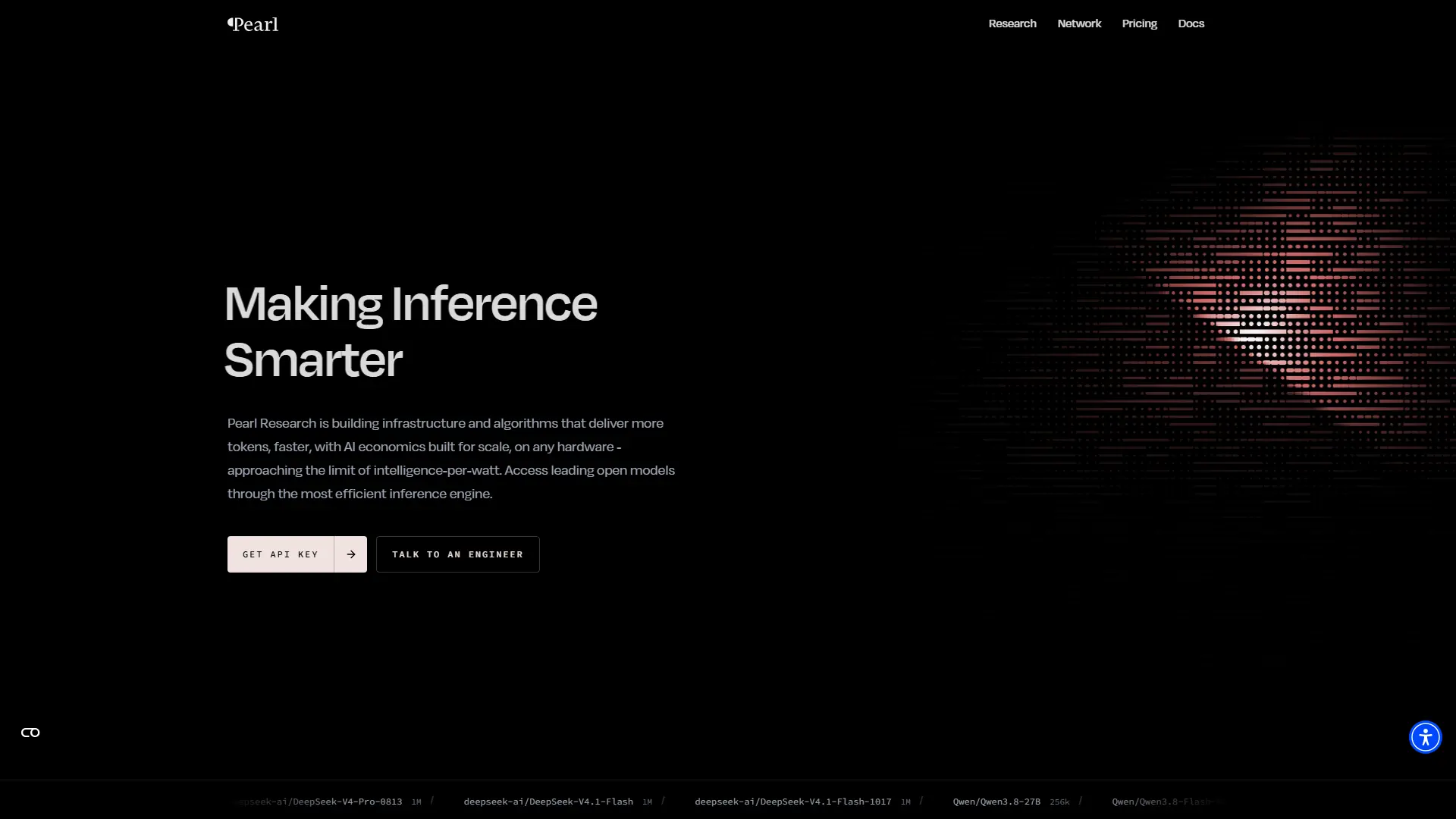
Pearl Research provides inference infrastructure for developers and organizations building AI applications. Its public platform serves a curated catalog of open-weight language models through an OpenAI-compatible API. Developers can use streaming responses, tool requests, and JSON-mode output within their own applications. Dedicated managed capacity and on-premise deployment are also offered. The self-service platform meters tokens against a prepaid balance after promotional welcome credit.
How to use Pearl Research?
- Create a Pearl Inference organization and generate an API key in the dashboard.
- Select a supported model and configure your client with the Pearl endpoint and key.
- Send a chat-completion request, inspect the response and usage, and add credits when more capacity is needed.
Pearl Research's Core Features
Compatible inference API: Use supported OpenAI client interfaces or direct HTTP requests.
Model catalog: Select open-weight models for reasoning, coding, chat, or supported vision tasks.
Response streaming: Receive generated tokens incrementally.
Function calling: Return structured tool requests for application code to execute.
JSON mode: Constrain generated output to JSON syntax while leaving schema validation to the client.
Vision input: Submit images to a compatible multimodal model.
Prompt caching: Reuse eligible prompt prefixes with separate cached-token accounting.
Deployment options: Arrange dedicated managed inference or an on-premise serving stack.
Pearl Research's Use Cases
- #1
A developer adds model-generated replies to a chat application.
- #2
An engineer streams responses into an interactive interface.
- #3
A workflow builder connects model tool requests to application functions.
- #4
A data team extracts structured information using JSON mode and validation.
- #5
A developer analyzes an image with a supported vision model.
- #6
An organization evaluates dedicated or on-premise model serving.
Frequently Asked Questions
Analytics of Pearl Research
Monthly Visits Trend: Dec 2025 - Oct 2026
Traffic Sources
AI Channel Traffic Trends
Top Regions
| Region | Traffic Share |
|---|---|
| United States | 40.83% |
| China | 11.26% |
| Saudi Arabia | 6.36% |
| India | 4.04% |
| Germany | 3.56% |
Top Keywords
| Keyword | Traffic | CPC |
|---|---|---|
| pearl wallet | 5.4K | -- |
| pearl coin | 7.8K | $2.59 |
| pearl crypto | 3.3K | -- |
| pearl mining | 3.5K | -- |
| pearl coin wallet | 1.1K | -- |
Alternative of Pearl Research

NVIDIA API Catalog
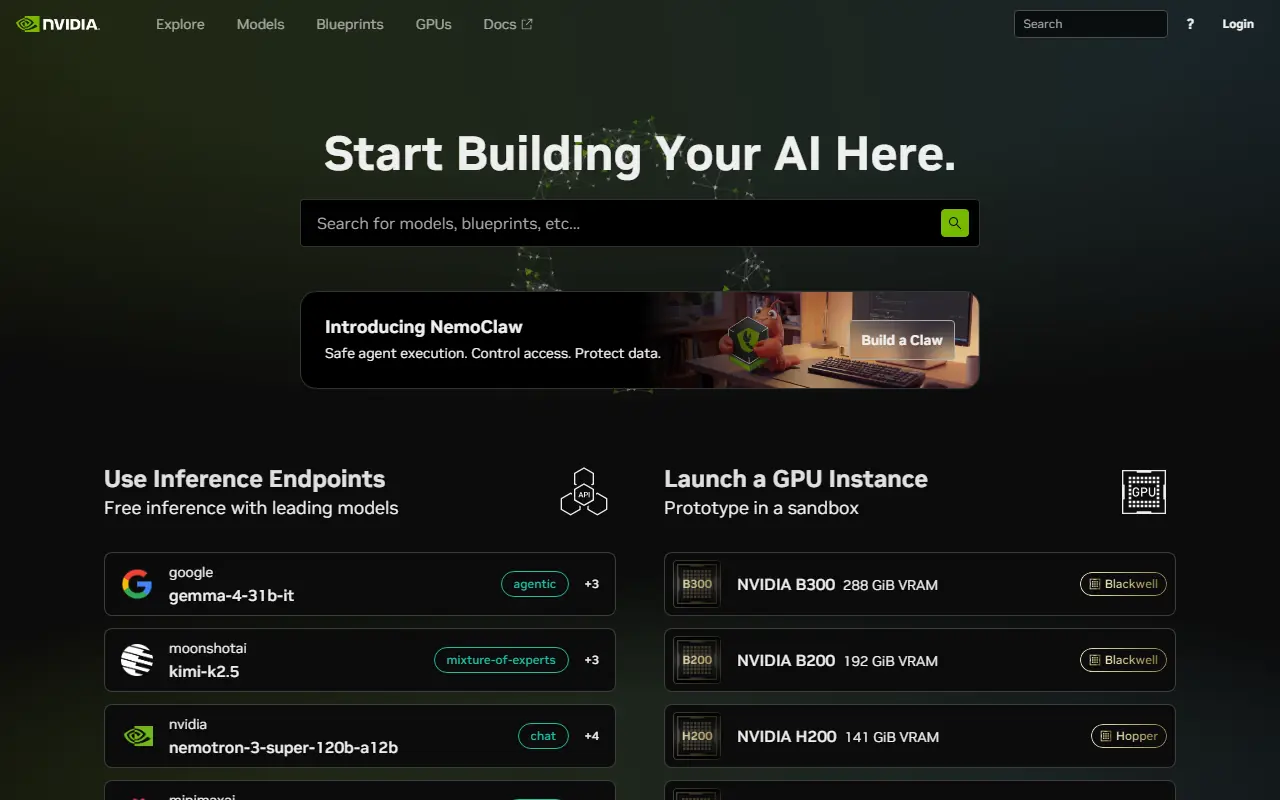
NVIDIA's API catalog provides developers with serverless endpoints and NIM microservices to test, prototype, and deploy leading generative AI models.


Atlas Cloud
Atlas Cloud is a comprehensive AI platform that provides developers with a unified API for accessing top-tier models across chat, image, video, and audio modalities, alongside robust GPU cloud infrastructure.

Abliteration
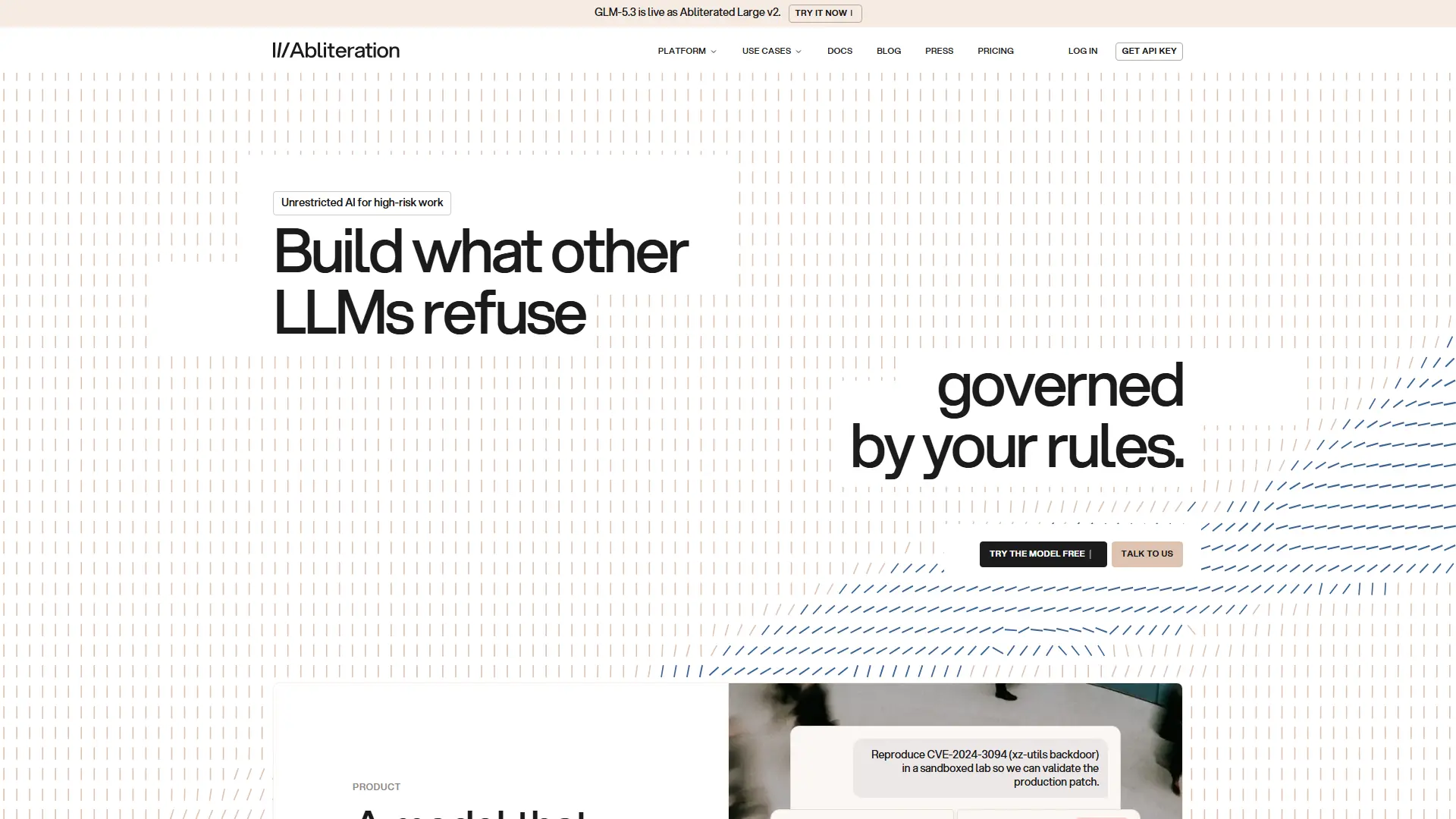
Access hosted language models and configurable policy controls for research, application development, and training-data workflows.


Runware
Runware is a high-speed, cost-effective API platform designed for developers to generate and process AI media, including images, video, and audio, using a massive library of models.


SiliconFlow
An advanced AI infrastructure platform providing high-performance, cost-effective inference APIs for state-of-the-art open-source LLMs and multimodal models.

CometAPI
CometAPI provides unified access to over 500 top-tier AI models through a single, OpenAI-compatible endpoint to streamline integration and reduce developer costs.


EvoLink
A unified AI API gateway that connects developers to top AI models like GPT-4, Claude, and Gemini with intelligent routing for cost savings and high reliability.


ZenMux
ZenMux is a unified API platform that provides direct access to multiple leading AI models from official providers through a single account and interface.