

TypeSafe AI
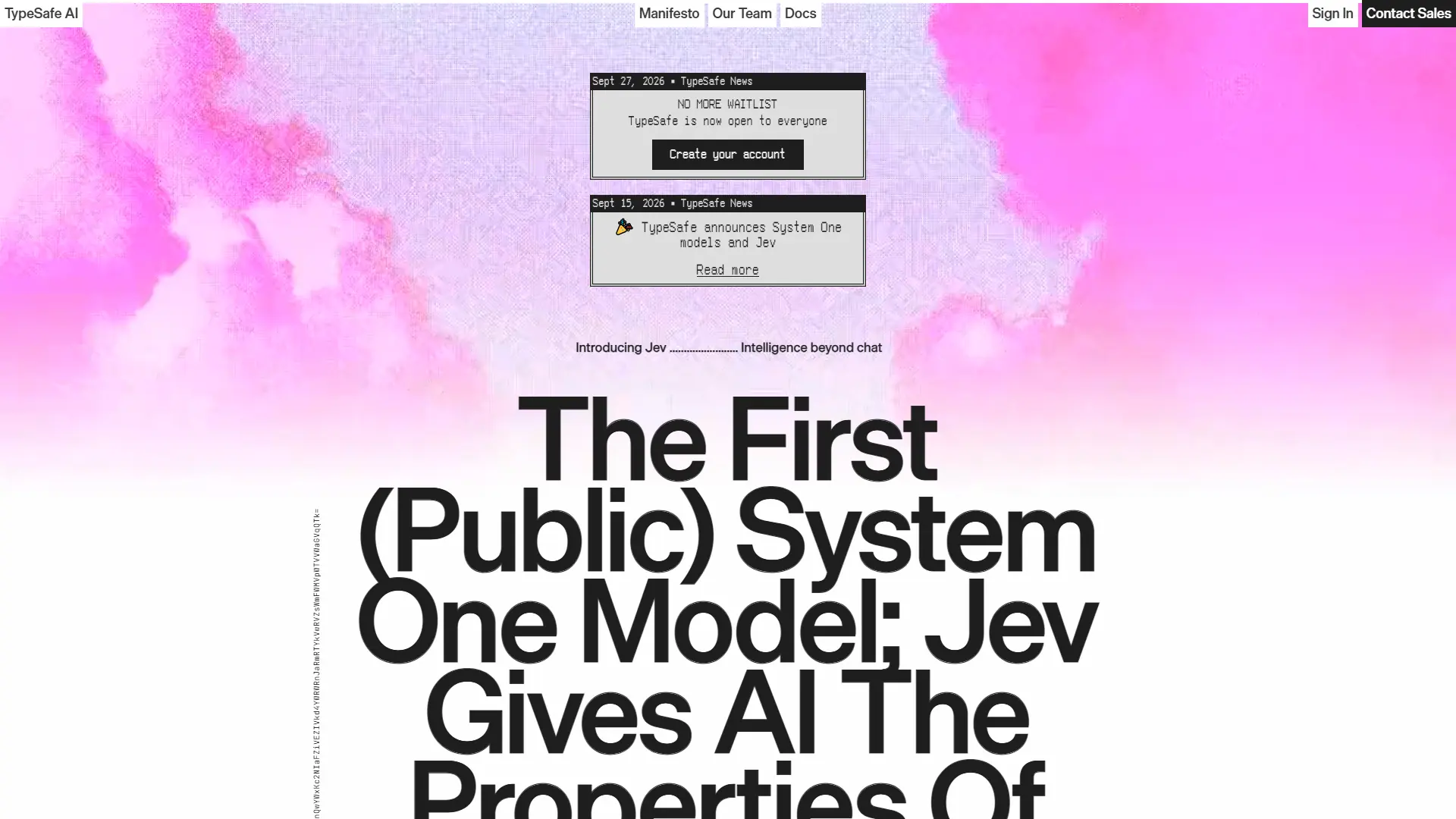
What is TypeSafe AI?
TypeSafe AI builds System One models for making structured decisions inside software rather than generating open-ended text for people. Its first public model, Jev, evaluates application state against typed Choice, Score, and Noul questions and returns values, probabilities, and confidence that code can use directly. TypeSafe says Jev uses a new model architecture, parallel sampling, and Reinforcement Learning for Calibrated Decisions (RLCD) to optimize for machine-consumable judgments. The product is aimed at developers and teams building automation, routing, verification, classification, retrieval, guardrails, and other decision-heavy workflows. Its main differentiator is a machine-native API where schemas are defined in advance and uncertainty can be handled explicitly in code instead of relying on generated prose.
How to use TypeSafe AI?
Step 1: Sign in to the TypeSafe console, open the Playground or create an API key, and provide the text or structured state you want Jev to evaluate. Step 2: Add one or more typed Choice, Score, or Noul questions that define the decisions your application needs. Step 3: Run the request, inspect the returned values, probabilities, and confidence, then connect those outputs to routing, thresholds, review queues, or other code-controlled actions.
TypeSafe AI's Core Features
Typed Decision API: Return structured Choice, Score, and Noul answers that application code can consume without parsing generated prose.
Calibrated Probabilities: Use probability distributions and confidence values to set thresholds for automation, review, and escalation.
Parallel Question Evaluation: Evaluate multiple independent questions against the same state in one request to improve workflow efficiency.
Code-Controlled Composition: Combine narrow model judgments with deterministic business logic so developers retain control of workflow behavior.
Jev Model Access: Call the current Jev model through a single System One endpoint and pin a version when stable behavior matters.
Playground: Test states and typed questions interactively before moving a workflow into production code.
Python and JavaScript SDKs: Integrate TypeSafe with typed client libraries that include retries and standard API handling.
Agent Skill: Give Claude Code, Codex, and other coding agents TypeSafe-specific API patterns and implementation guidance.
Large Text Context: Process text or structured text state with Jev 1.13 using up to a 64k-token request budget, subject to documented per-state limits.
Usage-Based API Pricing: Pay for input tokens while output tokens are currently free, with higher limits available through custom or enterprise arrangements.
TypeSafe AI's Use Cases
- #1
Route customer-support tickets by intent, urgency, frustration, and escalation risk without parsing free-form model responses.
- #2
Screen LLM prompts, outputs, and tool calls for jailbreaks, policy violations, sensitive data, or response-quality failures.
- #3
Rerank search or RAG candidates by semantic relevance before sending the strongest context to a downstream model.
- #4
Classify contracts, policies, filings, or marketing claims against explicit compliance criteria and escalate uncertain findings.
- #5
Score resumes or application materials against job-related criteria and route low-confidence cases to human review.
- #6
Extract probabilistic features such as purchase intent, churn signals, or risk indicators from large volumes of text for predictive models.
- #7
Build a model router that classifies domain, difficulty, or risk and sends each request to the appropriate LLM or human workflow.
Frequently Asked Questions
Analytics of TypeSafe AI
Monthly Visits Trend: Sep 2025 - Aug 2026
Traffic Sources
Top Regions
| Region | Traffic Share |
|---|---|
| United States | 100.00% |
Top Keywords
| Keyword | Traffic | CPC |
|---|---|---|
| typesafe ai | 1.4K | $5.59 |
| typesafe | 910 | -- |
| typesafe login | 210 | -- |
| type safe | 820 | -- |
| type safe ai | 160 | -- |
Alternative of TypeSafe AI
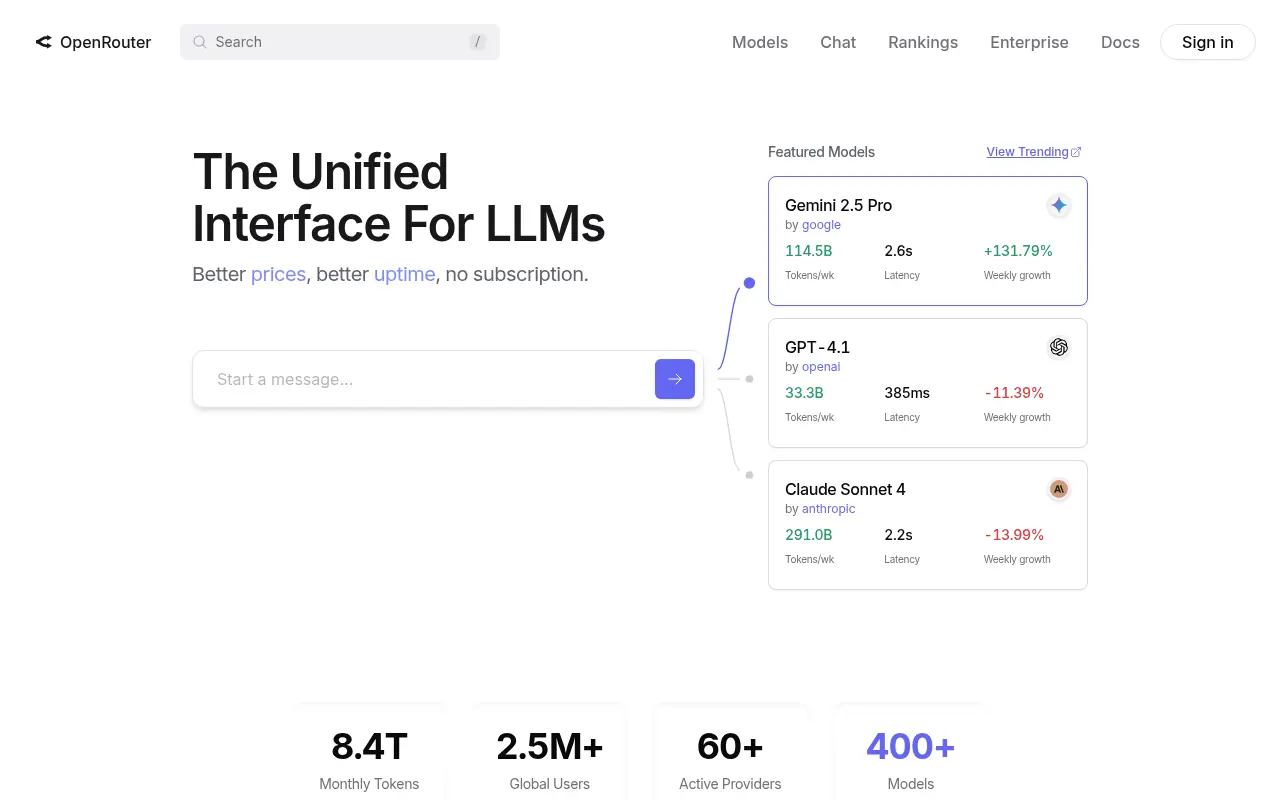

OpenRouter
OpenRouter provides a unified API for accessing multiple AI language models from various providers.
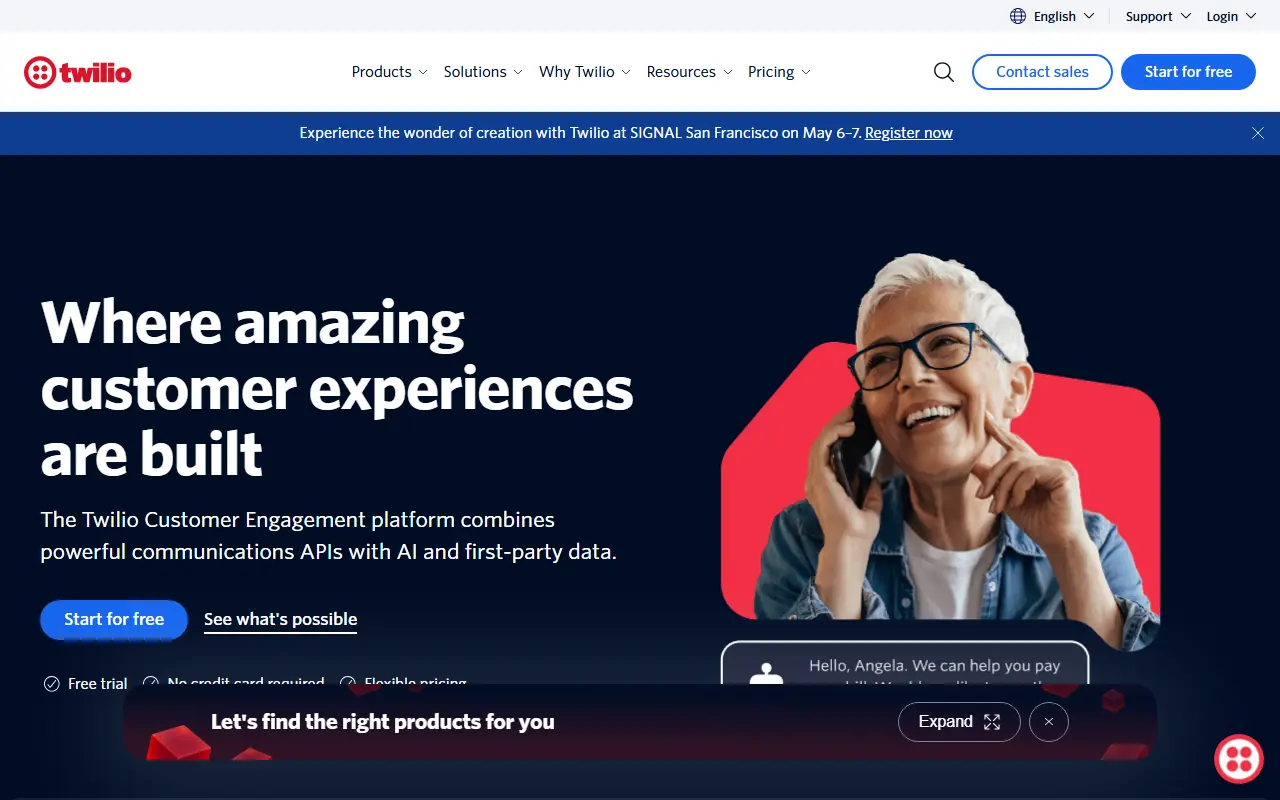

Twilio
Twilio is a leading customer engagement platform that provides programmable APIs for SMS, voice, video, and AI-driven communication solutions.


Rentahuman.ai
A marketplace platform that allows AI agents to hire real humans for physical, real-world tasks via an API.
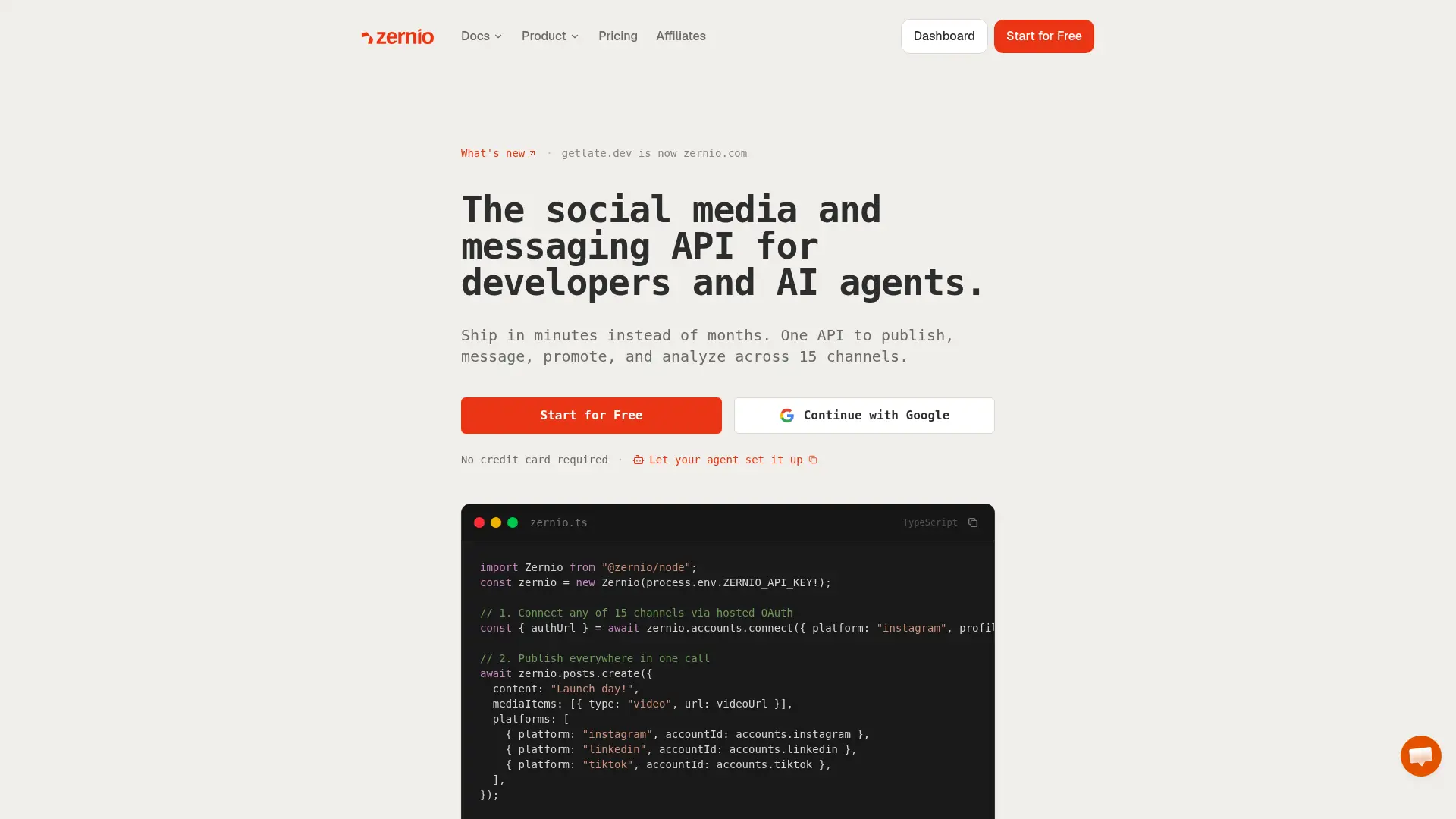

Zernio
Unify social media, messaging, advertising, and analytics through one API built for developers, SaaS products, and AI agents.

GMI Cloud
Deploy and scale AI workloads with NVIDIA-powered cloud infrastructure, optimized inference, and flexible GPU access.

CometAPI
CometAPI provides unified access to over 500 top-tier AI models through a single, OpenAI-compatible endpoint to streamline integration and reduce developer costs.


Sendblue
Send iMessages, RCS, and SMS programmatically to power responsive customer, sales, and AI-agent workflows.

NVIDIA API Catalog
NVIDIA's API catalog provides developers with serverless endpoints and NIM microservices to test, prototype, and deploy leading generative AI models.